
For Data & Analytics Teams
Build Trusted Models. Give Teams Trusted Answers.
Dex explores your warehouse and authors the dbt models and semantic definitions your team owns, inside the coding agent you already use. Viz turns those same definitions into dashboards the business can build for itself.
Dex
Explore, transform, maintain
Your data team, in the warehouse and the dbt project
Semantic layer
Models, metrics, join paths
One governed set of definitions your team owns
Viz
Dashboards and reports
Business users, answering their own questions
Your Team Shouldn't Be a Help Desk
Data teams are drowning in ad-hoc requests. Every stakeholder needs a dashboard, every exec wants a custom report, and your analysts spend more time fielding questions than doing the modeling work only they can do.
Meanwhile the models themselves fall behind. A source table gains a column, a key stops being unique, a metric quietly means two different things in two different dashboards, and nobody notices until a number is disputed in a meeting.
Exmergo splits the work along the line it was always meant to follow. Your engineers use Dex to explore the warehouse and author tested dbt models and semantic definitions, and keep them correct as schemas drift. Everyone else uses Viz, which reads those governed definitions rather than re-implementing them.
From warehouse to dashboard, in two steps
Step 1 · Data team
Build the foundation with Dex
Engineers point Dex at the warehouse and explore schemas, grain, and join paths from SQL aggregates rather than guesswork. From there Dex authors tested dbt models and semantic definitions as reviewable diffs, and reports schema, volume, grain, and semantic drift with a proposed fix when the warehouse moves underneath them.
Step 2 · Business users
Visualize it with Viz
Business users open Viz and ask for a metric by name. Viz resolves the question against the definitions your team maintains and builds the dashboard, so self-service answers agree with the rest of the stack instead of forking it. No Dex installation is needed to use Viz.
Built for How Data Teams Actually Work
Warehouse Exploration That Costs What You Expect
Dex profiles tables, infers join keys, and flags grain and quality problems from aggregates, with a cost guard on every connector so an exploration never spends more than you approved.
dbt Models and Semantic Definitions as Diffs
Dex authors staging and mart models, tests, docs, and MetricFlow or Apache Ossie semantic definitions, validated against the real schema and handed back as a reviewable diff you own in your repo.
Self-Service That Stays Governed
Viz reads the metrics, dimensions, and verified join paths your team defined. Every chart names the definition behind it, so giving the business self-service does not mean giving up on one source of truth.
One Definition, Every Dashboard
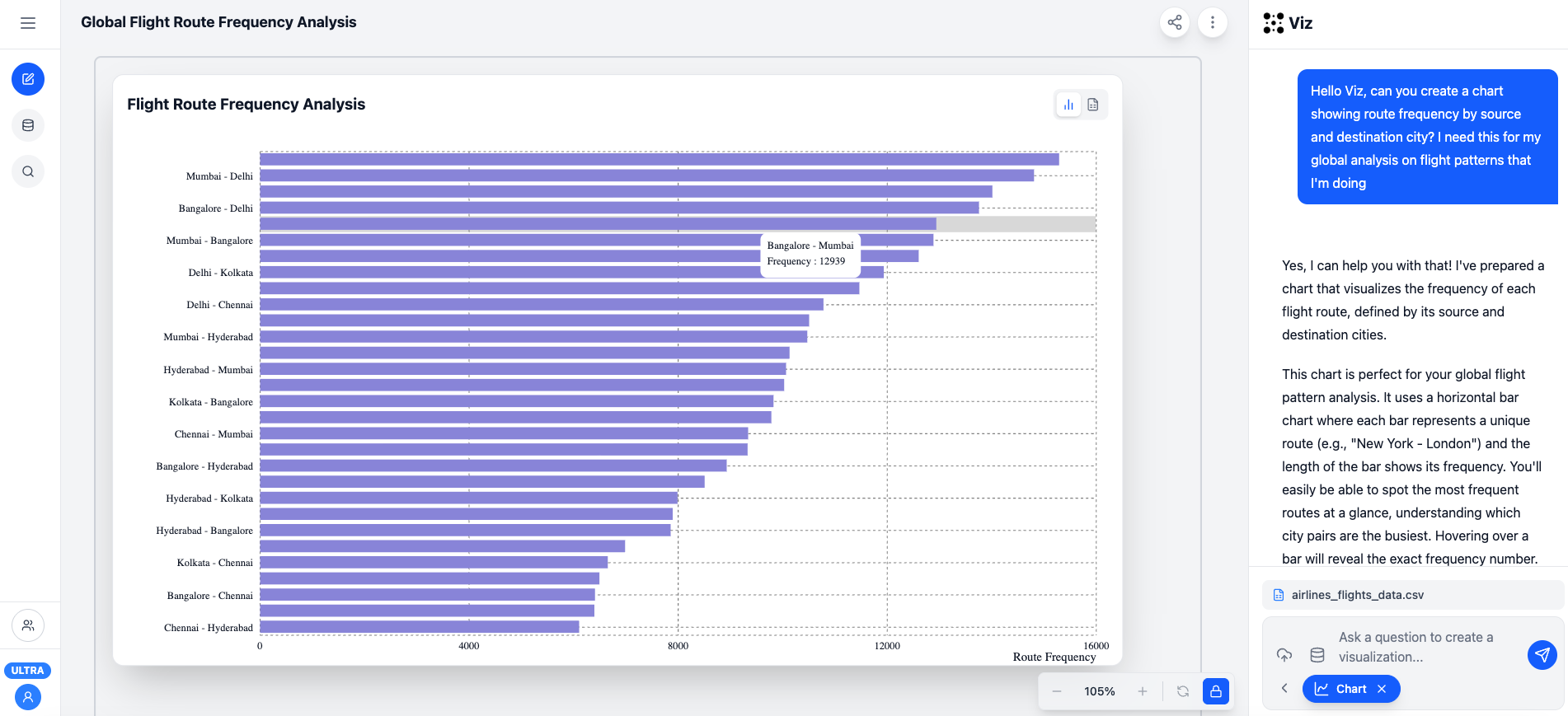
Business users ask for a metric in plain English. Viz resolves it against the semantic layer your team maintains in Dex and builds the interactive dashboard around it.
What Your Team Gets
Modeling work stays in the dbt project your team reviews and owns
Drift in the warehouse surfaces as a proposed fix, not a disputed number
Business teams answer their own questions against your definitions